Showing posts with label Slovenia 5. Show all posts

Slovenia - The works of Jože Plečnik in Ljubljana – Human Centred Urban Design

"The work Jože Plečnik carried in Ljubljana between World War I and World War II present an example of a human centred urban design that successively changed the identity of the city following the dissolution of the Austro-Hungarian Empire, when it changed from a provincial city into the symbolic capital of the people of Slovenia. The architect Jože Plečnik contributed to this transformation with his personal, profoundly human vision for the city, based on an architectural dialogue with the older city while serving the needs of emerging modern 20th century society. The property consists of a series of public spaces (squares, parks, streets, promenades, bridges) and public institutions (national library, churches, markets, funerary complex) that were sensitively integrated into the pre-existing urban, natural and cultural context and contributed to the city’s new identity. This highly contextual and human-scale urbanistic approach, as well as Plečnik’s distinctive architectural idiom, stand apart from the other predominant modernist principles of his time. It is an exceptional case of creating public spaces, buildings and green areas according to the vision of a single architect within a limited time, the limited space of an existing city, and with relatively limited resources."

Source: UNESCO World Heritage Tentative List

Beautiful center of Old town of Ljubljana, Slovenia. Year of Tiger stamp used. Thanks to Vesna of Slovenia.


Slovenia - Škocjan Caves

"This exceptional system of limestone caves comprises collapsed dolines, some 6 km of underground passages with a total depth of more than 200 m, many waterfalls and one of the largest known underground chambers. The site, located in the Kras region (literally meaning Karst), is one of the most famous in the world for the study of karstic phenomena." 

Source: UNESCO World Heritage

Skocjan Caves in the southwest of Slovenia. Nice stamps. Thanks to Leonardo of Slovenia.


Slovenia - Spain - Heritage of Mercury Almadén and Idrija

"The property includes the mining sites of Almadén, where mercury (quicksilver) has been extracted since Antiquity, and Idrija, where mercury was first found in 1490 A.D. The Spanish property includes buildings relating to its mining history, including Retamar Castle, religious buildings and traditional dwellings. The site in Idrija notably features mercury stores and infrastructure, as well as miners’ living quarters, and a miners’ theatre. The sites bear testimony to the intercontinental trade in mercury which generated important exchanges between Europe and America over the centuries. The two sites represent the two largest mercury mines in the world and were operational until recent times." 

Source: UNESCO World Heritage.

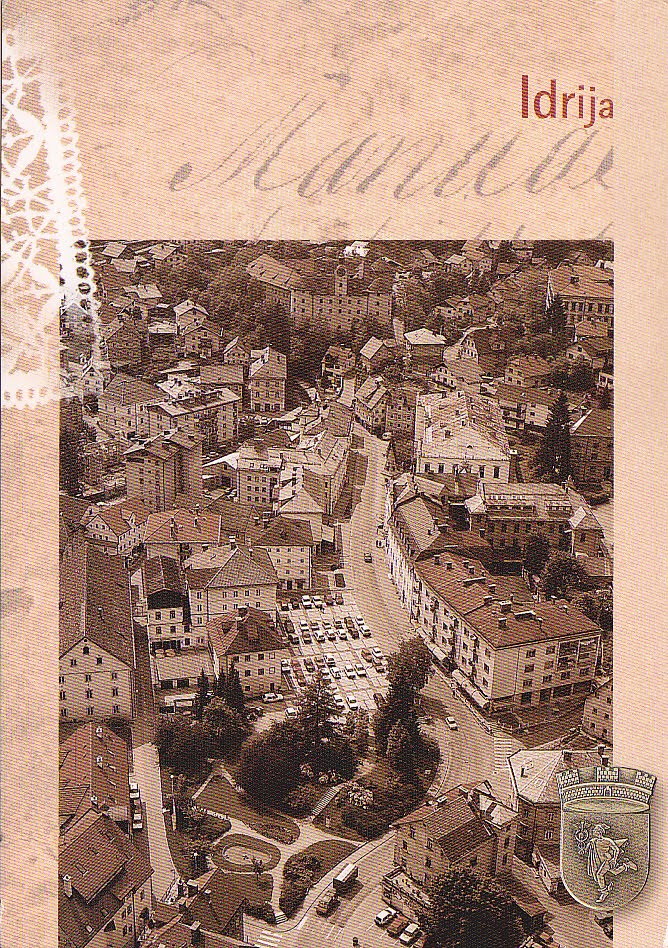
Postcard 1 - Slovenia - Idrija Old Town
Aerial view of old town of Idrija. Thanks to Vesna of Slovenia.


Postcard 2 - Slovenia - Idrija Multi-view
Idrija - Antoijev rov - Anthony's Shaft; Kamst; Rudarji - The Miners; Rudarska hisa - The miner's house. Thanks to Simona of Slovenia.


Postcard 3 - Spain - Almaden
Mercury mines of Almaden, Spain. Thanks to Inigo fo Spain.


Austria , France , Germany , Italy , Slovenia , Switzerland - Prehistoric Pile dwellings around the Alps

"This serial property of 111 small individual sites encompasses the remains of prehistoric pile-dwelling (or stilt house) settlements in and around the Alps built from around 5000 to 500 B.C. on the edges of lakes, rivers or wetlands. Excavations, only conducted in some of the sites, have yielded evidence that provides insight into life in prehistoric times during the Neolithic and Bronze Age in Alpine Europe and the way communities interacted with their environment. Fifty-six of the sites are located in Switzerland. The settlements are a unique group of exceptionally well-preserved and culturally rich archaeological sites, which constitute one of the most important sources for the study of early agrarian societies in the region."

Source: UNESCO World Heritage

Wanted: I am still looking for this Prehistoric Pile dwelling WHS for France. Anyone can help? Thanks.

Postcard 1A - AUSTRIA _ Pfahlbauten Am Mondsee
Single view. Thanks to Patrick of Estonia who visited Austria.


Postcard 1B - AUSTRIA - Pfahlbaumusem Mondsee
A nice multi-view postcard Pfahlbaumuseum Mondsee. Thanks to Sarah of Austria.


Postcard 2A - GERMANY - Pfahlbauten
Pfahlbauten, Bodensee, Germany. A reconstruction of a Prehistoric Pile Dwelling in Germany. Thanks to Violet of Germany.


Postcard 2B - GERMANY - Unteruhdlingen
Alpine dwellings at Unteruhldingen, Bodensee, Germany. Thanks to Janet of Germany.


Postcard 2C - GERMANY Pfahlbaumuseum
Pfahlbaumuseum is an open air archaeological museum, located on Lake Constance (Bodensee) in Unteruhldingen, Germany. It has reconstructions of stilt houses or lake dwellings from the Neolithic Stone Age and Bronze Age. Thanks to Sabrina for mailing from Switzerland.

Postcard 3 - ITALY - Palafitte
Palafitte di Ledro Alpine Dwellings. Museo dell Palfitte, Molina di Ledro, Italia. Thanks to Sabine of Italy. Grazie.


Postcard 4 - SLOVENIA - Koliscar
An extra long postcard illustrating the UNESCO World Heritage subsite of Alpine Pile Dwellings in Koliscarjev, Slovenia. Thanks to Martin of Celje, Slovenia which was postmarked on July 13, 2020 and arrived in Penang island on August 14, 2020.


Postcard 5A - SWITZERLAND - Underwater
Underwater view of prehistoric Alpine dwelling piles, Switzerland. Thanks to Sara of Switzerland.


Postcard 5B - SWITZERLAND -  Cortallilod
Maquette du village lacustre de Cortallilod. Age du Bronze final (1000 av. J.-C.). Museum model of the Prehistoric Pile Dwellings in Switzerland. Thanks to Zasa of Switzerland.