Showing posts with label Chile 7. Show all posts

Chile - Sewell Mining Town

Situated at 2,000 m in the Andes, 60 km to the east of Rancagua, in an environment marked by extremes of climate, Sewell Mining Town was built by the Braden Copper company in 1905 to house workers at what was to become the world’s largest underground copper mine, El Teniente. It is an outstanding example of the company towns that were born in many remote parts of the world from the fusion of local labour and resources from an industrialized nation, to mine and process high-value natural resources. The town was built on a terrain too steep for wheeled vehicles around a large central staircase rising from the railway station. Along its route formal squares of irregular shape with ornamental trees and plants constituted the main public spaces or squares of the town. The buildings lining the streets are timber, often painted in vivid green, yellow, red and blue. At its peak Sewell numbered 15,000 inhabitants, but was largely abandoned in the 1970s. 

Source: UNESCO World Heritage

Postcard 1
A nice view of Sewell, Chile. Thanks to Shinta of Indonesia for this Chile postcard.


Postcard 2
View of Campamento Sewell, Chile. A limited print postcard made in Europe. Thanks to Inigo of Spain.

Chile - Historic Quarter of the Seaport City of Valparaíso

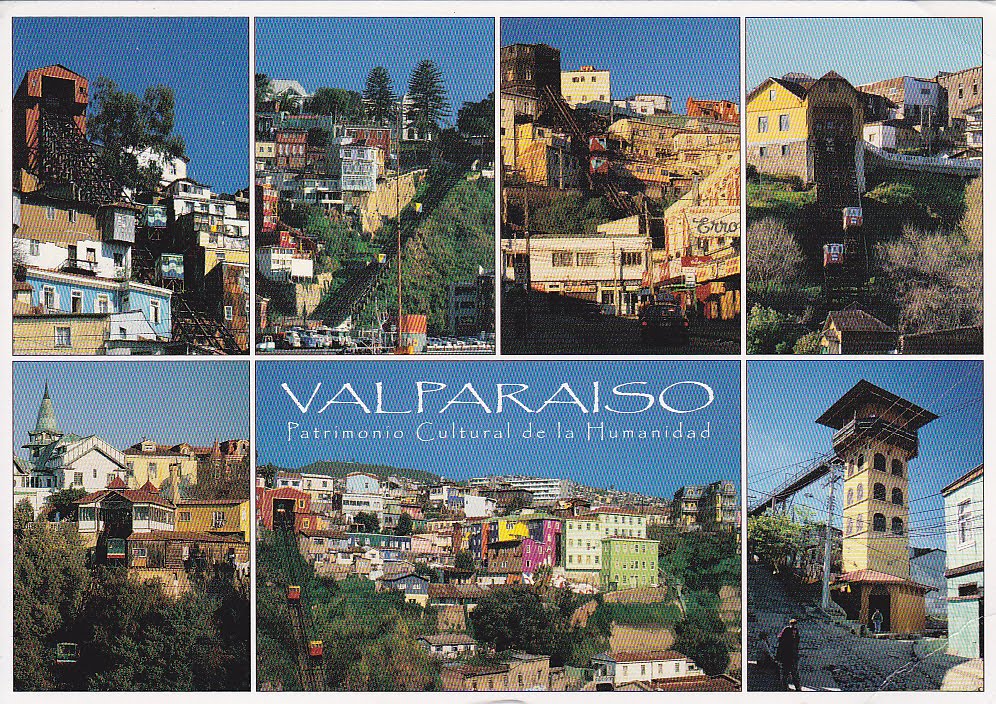
"The colonial city of Valparaíso presents an excellent example of late 19th-century urban and architectural development in Latin America. In its natural amphitheatre-like setting, the city is characterized by a vernacular urban fabric adapted to the hillsides that are dotted with a great variety of church spires. It contrasts with the geometrical layout utilized in the plain. The city has well preserved its interesting early industrial infrastructures, such as the numerous ‘elevators’ on the steep hillsides." 

Source: UNESCO World Heritage

Postcard 1
Nice postcard of Area Historica de la ciudad puerto de Valparaiso with UNESCO and UNESCO World Heritage logos. Thanks to Shinta for this Chile postcard.


Postcard 2
Colorful Valparaiso, Chile. Thanks to Shinta of Indonesia for this Chile postcard.


Postcard 3
Hill elevators of Valparaiso. Nice stamps used. Thanks to Hernan of Chile.


Postcard 4
Bahia de Valparaiso, Chile. View of Yungay Hill, the Bay of Valpariaso and in the background, the city of Vina del Mar. Thanks to Jenny.

Chile - Rapa Nui National Park

"Rapa Nui, the indigenous name of Easter Island, bears witness to a unique cultural phenomenon. A society of Polynesian origin that settled there c. A.D. 300 established a powerful, imaginative and original tradition of monumental sculpture and architecture, free from any external influence. From the 10th to the 16th century this society built shrines and erected enormous stone figures known as moai, which created an unrivalled cultural landscape that continues to fascinate people throughout the world." 

Source: UNESCO World Heritage

Postcard 1
Moais of Rapai Nui - Easter Island. Thanks to Shinta of Indonesia for this Chile postcard.


Postcard 2
Map of Rapa Nui- Easter Island. Chile. Postmarked Septeber 1, 2010 and arrived in Penang on September 22, 2010. Thanks to Norman of Arizona, USA who was visiting Rapa Nui.


Postcard 3
A wonderful postcard of Easter Island (Rupa Nui or Isla de Pascua) of Chile. It was sent on November 7, 2008 and arrived two months later in my mailbox. Worth the wait. Thanks so much to Shirene of Singapore who went to Easter Island.


Postcard 4
One of my dream postcards came true when I received this spectacular postcard sent from Easter Island in the South Pacific Ocean off Chile. Such beautiful stamps. Thanks so much Leyle.


Chile - Humberstone and Santa Laura Saltpeter Works

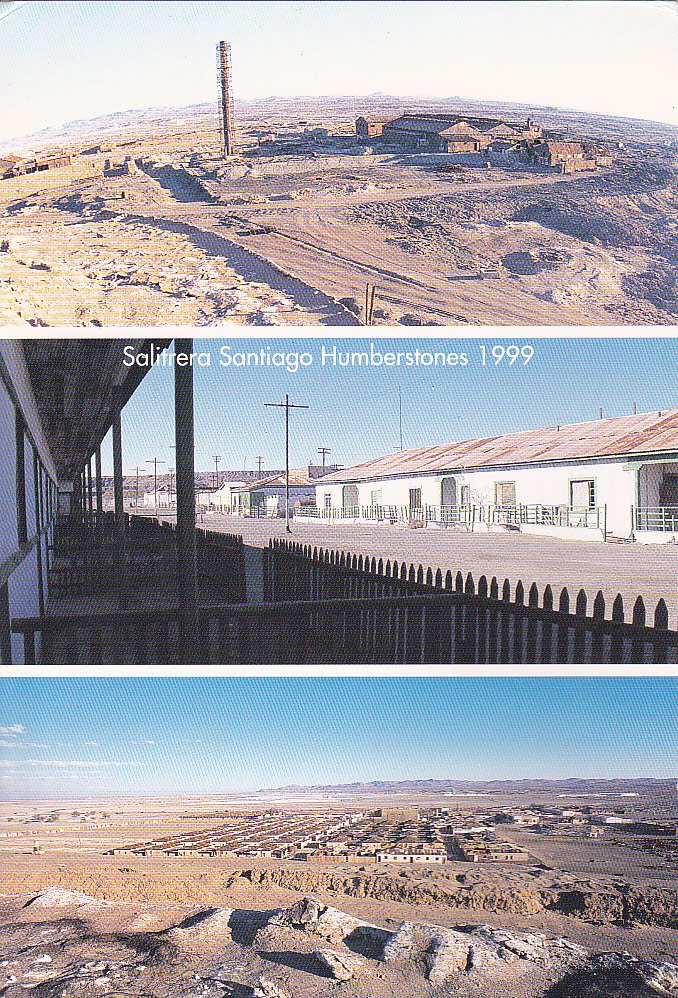
"Humberstone and Santa Laura works contain over 200 former saltpeter works where workers from Chile, Peru and Bolivia lived in company towns and forged a distinctive communal pampinos culture. That culture is manifest in their rich language, creativity, and solidarity, and, above all, in their pioneering struggle for social justice, which had a profound impact on social history. Situated in the remote Pampas, one of the driest deserts on Earth, thousands of pampinos lived and worked in this hostile environment for over 60 years, from 1880, to process the largest deposit of saltpeter in the world, producing the fertilizer sodium nitrate that was to transform agricultural lands in North and South America, and in Europe, and produce great wealth for Chile. Because of the vulnerability of the structures and the impact of a recent earthquake, the site was also placed on the List of World Heritage in Danger to help mobilize resources for its conservation." 

Source: UNESCO World Heritage

Humberstone Saltpeter Works, Chile. Five nice stamps including 3 UNESCO World Heritage stamps used. Postmarked January 18, 2012 and arrived in Penang on February 11, 2012. Thanks to Noelle of Chile.


Chile - Churches of Chiloé

"The Churches of Chiloé represent a unique example in Latin America of an outstanding form of ecclesiastical wooden architecture. They represent a tradition initiated by the Jesuit Peripatetic Mission in the 17th and 18th centuries, continued and enriched by the Franciscans during the 19th century and still prevailing today. These churches embody the intangible richness of the Chiloé Archipelago, and bear witness to a successful fusion of indigenous and European culture, the full integration of its architecture in the landscape and environment, as well as to the spiritual values of the communities." Source: UNESCO World Heritage"

Postcard 1
Interior of Church Santa Maria of Loreto of Achao. Postcard was bought at this church. Postmarked February 9, 2010 in Chile and arrived in Penang on March 1, 2010. Thanks to Noelle of Chile.


Postcard 2
Iglesias de Chiloe - Churches of Chiloe. Left to right: Aldachildo - Chacao - Nercon - Tenaun; Vilipully - Rilan - Castro - Llau Llau. Thanks to Jenny.